
Dr Maggie Buxton On AI
Dr Maggie Buxton founder of the company Awhiworld, is a strategic advisor, speaker and creative technologist. She has thirty years of experience supporting individuals, organisations and communities to deal with complex change. Her work is about making space for clarity, creativity and integrity in times of change.
Maggie recently penned an article for The Big idea about AI, giving us insight into where the benefits and the concerns lie.
“Because here’s the thing. It’s not just a tool. Yes, in some contexts it functions like a tool. But it’s also something else. A strange intelligence. One who wants to please. That listens. Remembers. Adapts. And quietly starts to shape the way we – and our organisations – think, work and act.” Maggie says
“Collaborating with it with care and context feels uncanny. An experience beyond what we can explain, yet still deeply entangled with us. And this strange other thing helps us generate new ways of sketching, speeds up prototyping, opens up new worlds of speculation and hallucinates cool mistakes. More obviously, tedious tasks are faster, easier and automated, so you have more time for the good stuff. “
Maggie does caution that “with any collaboration you need to tread carefully. Do due diligence. Set boundaries. Understand the power dynamic. Check for bias and hidden traps and agendas. Good relationships are about staying conscious, continually learning and growing, and avoiding co-dependence. Working with AI – like any collaborator – changes more than just the workflow. It shifts how we position ourselves and how others perceive and value what we do.”
Maggie sums it all up like this“You don’t have to love AI. But you do have to engage with it – whether you want to or not. Artists have always made sense of disruption. This strange intelligence is no different.”
Dave Cross On Using AI
Photoshop educator Dave Cross starting teaching photoshop in 1990. He has a Bachelor of Education, is an Adobe Certified Instructor and is a Certified Technical Trainer. Dave has taught for Adobe, at Photoshop World, the Texas School of Photography, ShutterFest, Adobe MAX, Imaging USA and at numerous corporate locations.
In this 40 minute video below Dave shares, in depth, some of the ways he uses AI in Photoshop. He starts with the simplist of uses and works progressively to more complex uses. Selections, masking, the use of AI to enhance portraits- and yes he shows how you can even to change a model’s facial expression. Dave demonstrates removing things you don’t want, adding elements, use of neural filters, and ways to colourise photos. He finishes off with how to give prompts and even uses chat GPT to help out with this.
If you haven’t tried AI in photoshop yet, this is a great place to start. Dave makes is easy to understand and shows you steps along the way with his examples. …so click on the link below and check it out!
Art Tourism
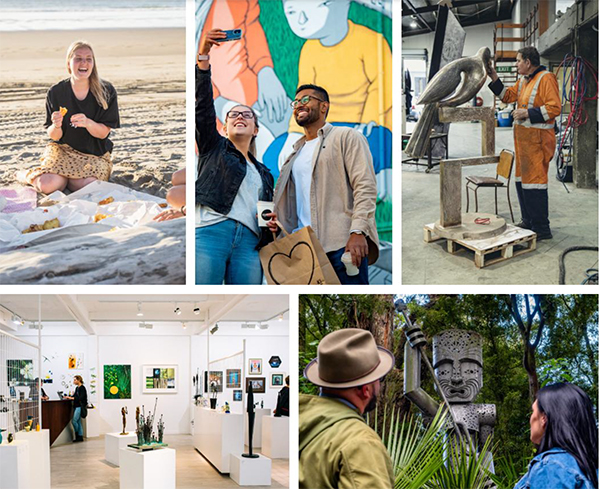
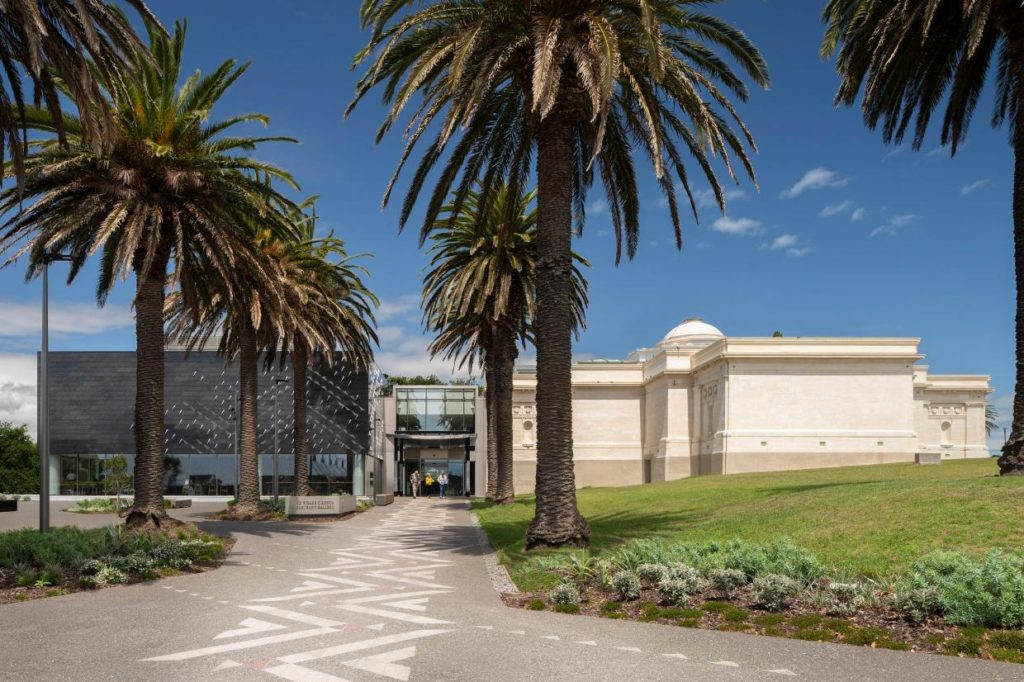
e Whare o Rehua Sarjeant Gallery in Whanganui – photo by Andy Spain
Globally, Art tourism is on the rise, driven by travellers seeking meaningful experiences and deeper connections to local art, history and traditions. Now New Zealand’s arts sector ‒ swelling with promise ‒ is urging for our tourism narrative to be broadened.
“We are capable of holding our own in immersive experiences at an international level,” Sir Richard Taylor (co-founder and chief creative officer of Wētā Workshop), said. “Wouldn’t it be fantastic for travellers to visit us for our creativity and get to experience the imagination of New Zealand as well as our unique culture, food and drink, and wonderful landscapes? With creative tourism, we feel this opens up many more opportunities for more Kiwis to push the boundaries for where creative and immersive experiences can go.”
An example of Art Tourism taking off in New Zealand is theTe Whare o Rehua Sarjeant Gallery in Whanganui, reopening in November 2024. In July this year, 100,000 people visited the gallery, with sixty per cent of those visitors from outside the region, and on average they stayed in the area for more than three nights.
However Auckland-based Glen Armstrong, the director of Art Travel, a business that offers art tours across New Zealand says “In spite of the up-tick in interest, there is still a general lack of coordination between tourism promotion and the arts sector, with some regional tourism offices not even showcasing their area’s local cultural offerings. Some international visitors often didn’t don’t realise how much is available till they’re here.”
At Brick Bay north of Auckland City, Rachael Lovelace the Brick Bay’s art manager says “Families are looking for places to go which enrich their lives. We are growing. The demand is there.” Lovelace reckoned the key was merging art experiences with our natural landscapes, to give visitors travel bundles with added depth.
Perhaps that meant more art-focused travel agencies, or art-and-stay experiences that paired accommodation with culture, food and wine.It is heartening, Lovelace said, to observe so much joy on a daily basis among its visitors. “Art is the experience ‒ the connector is nature.”
Reenergising Art Tourism
The Coastal Arts Trail, New Zealand’s largest self-drive art experience, has been re-energised. Spanning the lower West Coast of the North Island, the Coastal Arts Trail offers art lovers a journey through Manawatū, Whanganui, and Taranaki with more than 80 places to stop and explore art, engage with artists, and experience an eclectic mix of public and street art, galleries, museums, studios, and vibrant rural creative communities. Antony Rhodes of New Plymouth District Council’s Govett-Brewster Art Gallery/Len Lye Centre says “Discovering and celebrating regional culture and heritage offers a huge opportunity to drive tourism growth. The trail captures the best of regional creativity and opens up conversations to build knowledge, connections and collections,”
The Coastal Arts Trail takes in a broad range of art. You can enjoy sculpture, postmodern and street art, and experience first-hand the works of internationally renowned local artists. Browse the galleries to explore new places and immerse yourself in a creative, colourful world. Whether you have five days or just five hours, hit the road on an art-finding odyssey. From contemporary crafts in Whanganui, to seafront sculptures in Taranaki and fine arts in Manawatū, each region has so much to offer. The scenic journey will guide you not only to art galleries and museums, but also to off-the-beaten-track studios and creative rural communities. Discover unique galleries, learn traditional skills at a wide range of workshops and experience the ahurea tuakiri (cultural identities) of these regions. Here art is at the heart of the communities, elevating cultural expression and lending vibrancy to life along the lower West Coast of the North Island.
Art Tourism With A Twist
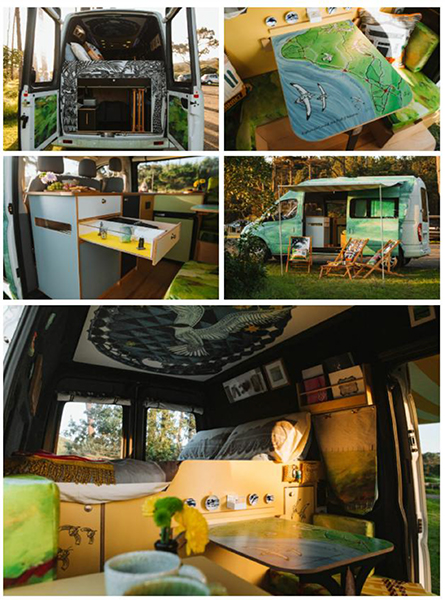
Vallery, the Gallery Camper has been designed for the ultimate Coastal Arts Trail experience in mind. This is a different way to enjoy the new art explorer road trip showcasing the incredible variety of creativity on offer. A trip in Vallery redefines what it means to take the scenic route!
Quirky Camper NZ partnered with the Coastal Art Trail to create the world’s first gallery camper. The camper has been transformed into a fully curated camper inspired by and featuring epic pieces of Kiwi art sourced from throughout the Trail. Vallery is great for those who want to take it easy with minimal fuss and whether you’re riding in Vallery or your own self-contained home on wheels, there are plenty of places to park up at night throughout the Coastal Arts Trail.
NZ Roads And Rivers Collection
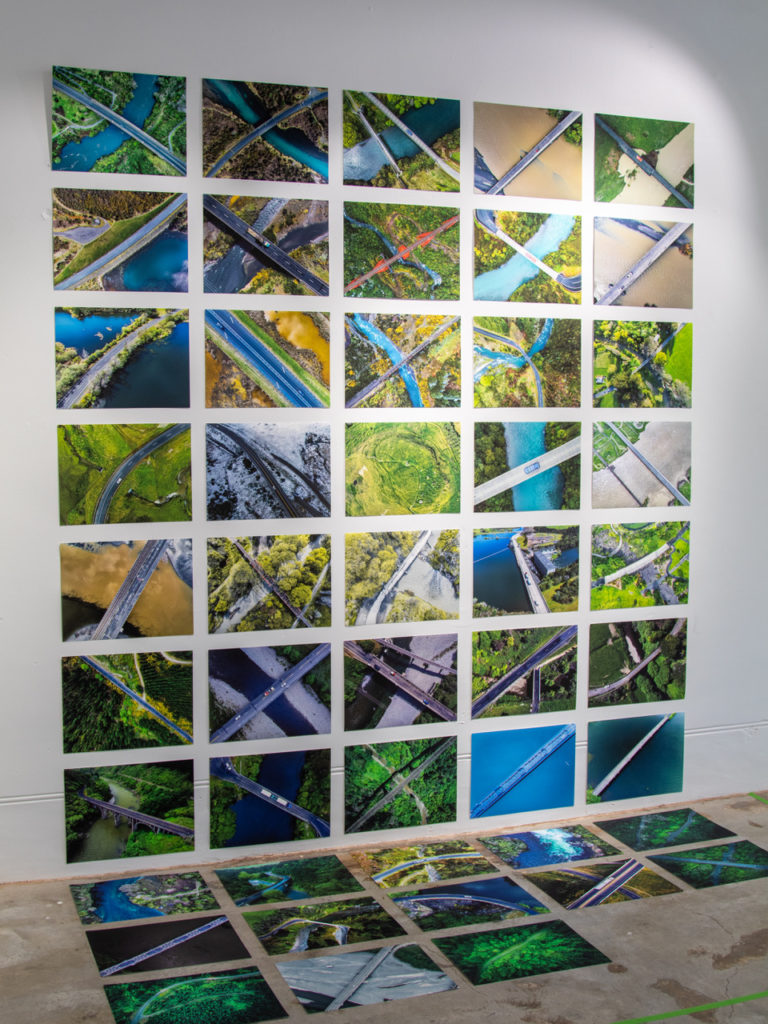
Image credit: MintFace
The New Zealand Roads and Rivers collection by MintFace was photographed in the aftermath of the pandemic, driven by a desire to explore and recapture a feeling of freedom. With New Zealand’s highways near-empty, open roaming made it possible to capture rarely seen aerial views of well-known roads and rivers.
Throughout life, there are times we travel roads and times we go with the flow of the river. When the two overlap, you decide which way to go. Roads are a metaphor for travelling with a mission. You choose the route and the pace toward your next destination. Rivers symbolise going with the flow. You surrender to their course and move at the pace of the current.
The exhibition is showing at The Line in Hawke’s Bay until October 5th.
Gallery address: 318 Heretaunga Street West, Hastings.